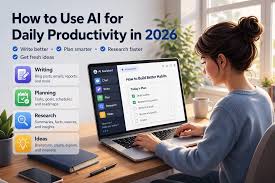
You’re looking to bring some smart tools into your day. Maybe you’ve heard about AI and wonder if it can really help. It can feel a bit overwhelming with so many options.
This guide breaks it down. We’ll look at how to find and use AI tools every single day. Think of it like finding the best kitchen gadgets.
They make cooking easier and more fun. AI tools can do the same for your work and life.
AI tools can help make your daily tasks simpler and faster. This guide explores how to find and use the best ones for your routine. Learn to boost your efficiency and get more done without the struggle.
What Are Daily AI Tools?
Daily AI tools are software or apps. They use artificial intelligence to help with everyday jobs. These jobs could be writing emails, planning your day, or even creating images.
They are designed to be easy to use. You don’t need to be a tech expert. Think of them as helpful assistants.
They work by learning from data. They can spot patterns. Then, they use these patterns to do tasks for you.
Some AI tools can write text that sounds like a person. Others can sort through lots of information very quickly. The main goal is to save you time.
They also aim to reduce the effort you put into certain tasks.
Many of these tools are cloud-based. This means you can use them from any device with internet. You just need a web browser or an app.
They are becoming a big part of how we work and live. Knowing about them can give you an edge. You can get more done and focus on what truly matters.
My First AI Tool Experience: A Week of Awkwardness
I remember when AI tools first started getting popular. I was working on a report. It was a huge document.
I had to write summaries for every chapter. My eyes were tired. My brain felt like mush.
I thought, “There HAS to be a better way.” So, I tried one of those new AI writing tools. I copied my chapter text into it. Then, I typed “Summarize this.” The AI gave me something back.
It was. weird. It used words I didn’t expect.
It missed some key points. I felt a pang of frustration. This wasn’t the magic bullet I hoped for.
It took me a few more tries that week. I felt silly. I was feeding my work into a computer program.
Would it understand? Would it make my writing sound robotic? I experimented with different prompts.
I learned that just saying “Summarize” wasn’t enough. I needed to be more specific. I had to tell it what kind of summary I wanted.
Was it for experts? For beginners? This early struggle taught me a big lesson.
AI tools are powerful, but they need clear instructions. They are not mind readers. They are tools that need skilled hands to guide them.
That week taught me empathy for the AI, and a bit more patience with myself.
Getting Started: The Basics
Choose Your Tool: Start with one or two. Don’t get lost in options.
Know Your Goal: What do you want help with? Writing? Planning?
Research?
Learn the Prompts: How you ask matters. Be clear and specific.
Review and Edit: AI is a helper, not a replacement. Always check the output.
Practice Often: The more you use it, the better you get.
Why Use AI Tools Every Day?
The main reason is efficiency. AI tools can speed up tasks that take hours. Imagine writing an email.
You might spend five minutes crafting it. An AI tool could do a good first draft in seconds. Then, you only need to make a few tweaks.
They also help with creativity. Stuck on a blog post idea? An AI can brainstorm topics for you.
Need a catchy headline? AI can generate options. It’s like having a brainstorming partner available 24/7.
This can break through writer’s block. It can spark new ideas you might not have thought of yourself.
Another benefit is reducing errors. For tasks like data entry or proofreading, AI can be very accurate. It doesn’t get tired like a human.
It can spot tiny mistakes. This is especially helpful for important documents. It helps ensure accuracy and professionalism.
Using AI tools means you can focus your own brainpower on harder problems. You can use your unique human skills for strategy and deep thinking.
AI Tool Categories for Daily Use
Writing Assistants: Help with emails, articles, social media posts.
Planning & Scheduling: Tools that help organize your calendar and tasks.
Research & Summarization: Quickly find and condense information from web pages.
Creative Tools: Generate images, music, or design ideas.
Coding & Development: Assist programmers with writing and debugging code.
Learning & Education: Personalize study plans or explain complex topics simply.
Finding the Right AI Tools for Your Workflow
The trick is to match the tool to your specific needs. What do you spend a lot of time on? What tasks do you find boring or difficult?
Start there.
For example, if you write a lot of emails, look for AI writing assistants. Tools like Jasper, Copy.ai, or even built-in features in programs like Microsoft Word can help. They learn your style over time.
They suggest phrases and even complete sentences.
If you’re a student or researcher, look for summarization tools. Tools like Scholarcy or QuillBot can take long articles and give you the main points. This saves hours of reading.
You can quickly scan what’s important. This helps you decide what to read in full.
Consider your budget too. Many tools offer free versions with limited features. This is a great way to test them out.
You can see if they fit your workflow before committing to a paid plan. Some paid plans are quite affordable. They offer much more power and features.
Don’t be afraid to experiment. What works for one person might not work for another. Try a few different tools in a category.
See which one feels most intuitive and helpful to you. Read reviews. Ask friends what they use.
Getting recommendations can also be a good starting point.
Integrating AI into Your Morning Routine
Your morning sets the tone for the day. AI can make it smoother. Many people start their day by checking emails.
An AI email assistant can help sort through them. It can highlight urgent messages. It can even draft quick replies for you.
This saves you from getting bogged down.
Next, you might plan your day. Instead of staring at a blank calendar, use an AI planner. Tell it your priorities.
It can suggest a schedule. It can block out time for deep work. It can remind you of meetings.
Tools like Motion or Reclaim.ai can do this.
Some people use AI for quick news summaries. Instead of scrolling through news feeds, an AI can give you a digest of the top stories. This way, you stay informed without the time sink.
Apps like Shortform or personalized AI news readers can be great for this. They help you get the information you need quickly.
This morning integration means you start your day proactively. You’re not just reacting to things. You’ve used smart tools to set yourself up for success.
It feels like you have a head start. This can reduce morning stress. It helps you feel more in control of your time.
Morning AI Workflow Example
8:00 AM: AI Email Triage – Tool drafts replies to routine emails.
8:15 AM: AI Schedule Optimizer – Tool suggests daily tasks and meeting slots.
8:30 AM: AI News Digest – Quick summary of top headlines delivered.
8:45 AM: AI-Assisted Task Prep – Tool provides quick context for first task.
AI for Work Tasks: Boosting Productivity
At work, AI tools can be game-changers. Writing reports, creating presentations, or analyzing data all become easier.
For presentations, AI can help with content and design. Tools like Tome or Gamma can take your ideas and build a visual presentation. You provide the text.
The AI suggests layouts and images. It can make a professional-looking deck in minutes. This is a huge time saver for anyone who presents often.
Data analysis is another area where AI shines. If you have spreadsheets full of numbers, AI can find trends. It can spot anomalies.
Tools like Tableau with AI features or specialized data analysis AI can help. They can turn raw data into understandable insights. This is valuable for business decisions.
Customer service is also being transformed. AI chatbots can handle common questions. They free up human agents for complex issues.
This improves response times. It also ensures customers get help quickly, day or night. Many CRM systems now have AI features to help manage customer interactions.
Even simple tasks like scheduling meetings can be automated. AI scheduling assistants can find times that work for everyone involved. They send out invites and manage RSVPs.
This removes the back-and-forth emails that often plague meeting arrangements. Tools like Calendly have AI features that help with this.
Productivity Boosters: AI at Work
Content Creation: AI helps write drafts, headlines, and social posts faster.
Data Analysis: AI finds patterns and insights in complex datasets.
Customer Support: Chatbots handle common queries, freeing up human agents.
Meeting Scheduling: AI finds optimal times and manages invites automatically.
Project Management: AI can help track progress and identify risks.
AI for Personal Life: Beyond the Office
AI isn’t just for work. It can simplify your personal life too. Think about meal planning.
You can use AI to suggest recipes based on what you have. Or, it can create a weekly meal plan. It can even generate a shopping list for you.
Planning a trip? AI can help. It can suggest destinations.
It can find flights and hotels. It can even create a day-by-day itinerary. This takes the stress out of vacation planning.
Tools like Kayak or Expedia are starting to use AI more heavily.
Your home can also become smarter with AI. Smart thermostats learn your habits to save energy. Smart speakers can play music, set timers, or control lights with your voice.
These devices learn your preferences. They make everyday living more convenient.
For hobbies, AI can be inspiring. If you like art, AI image generators can create unique visuals from your descriptions. If you’re a writer, AI can help you overcome writer’s block for your personal projects.
It can even help you learn a new language. Many language apps use AI to tailor lessons to your progress.
Even personal finance can get an AI boost. Some budgeting apps use AI to track spending. They can spot unusual transactions.
They can offer tips on saving money. This helps you manage your money better without constant manual effort. It makes financial planning more accessible.
My AI-Powered Weekend: Less Chores, More Fun
Last weekend, I decided to really lean into AI. Saturday morning, I needed to plan a family picnic. Usually, this involves a lot of back and forth.
“What should we bring?” “Who’s buying what?” I used an AI recipe generator. I told it we needed kid-friendly, outdoor-friendly foods. It gave me a list of ideas.
Then, I asked it to create a shopping list based on those recipes. It even suggested quantities. That alone saved me an hour of list-making and thinking.
Later, I wanted to find a new hiking trail. I usually spend ages on Google Maps, looking at reviews. I used an AI travel planner.
I said “family-friendly hikes near me, moderate difficulty, with a view.” It spit out three great options. It included trail maps and recent user comments. It even told me the best time of day to go for good lighting for photos.
This was incredibly helpful. It cut my research time down significantly. That afternoon, I spent more time enjoying the hike and less time planning it.
It felt like I had a personal assistant helping me have a better weekend.
Personal Life AI Tools
Meal Planning: AI suggests recipes and creates shopping lists.
Travel Planning: AI helps find destinations, flights, and itineraries.
Smart Home: AI optimizes energy use and controls devices via voice.
Hobby Support: AI aids in art creation, writing, and language learning.
Finance Management: AI tracks spending and offers savings advice.
When AI Doesn’t Quite Get It: The Limitations
It’s important to remember that AI is not perfect. It has limitations. One of the biggest is the lack of true understanding.
AI can process information. It can spot patterns. But it doesn’t “feel” or “understand” in a human way.
This means it can sometimes produce answers that are factually wrong. Or, they might be nonsensical in context.
Context is key. AI might struggle with nuance, sarcasm, or complex emotions. If you ask it to write a heartfelt letter, it might sound cliché.
It can mimic human emotion, but it doesn’t possess it. So, for tasks requiring deep empathy or fine judgment, human oversight is crucial.
Data bias is another issue. AI learns from the data it’s fed. If that data contains biases, the AI will reflect them.
This can lead to unfair or discriminatory outputs. For instance, an AI trained on biased hiring data might favor certain demographics. Being aware of this helps you question the AI’s results.
Privacy is also a concern. Many AI tools collect data. You need to be comfortable with what data is being collected and how it’s being used.
Always read the privacy policy. Understand how your information is handled. Some sensitive information should not be shared with AI tools.
Finally, AI can sometimes be too generic. It might produce safe, average answers. If you need something truly innovative or unique, you might need to push the AI further.
Or, you might need to do that part yourself. AI is best for efficiency and augmentation, not always for groundbreaking originality on its own.
How to “Prompt” AI Effectively for Daily Use
The magic of AI often lies in how you ask for things. This is called “prompting.” A good prompt is like giving clear directions. A bad prompt is like wandering around asking for “stuff.”
Be Specific: Instead of “Write a blog post,” try “Write a blog post about the benefits of indoor plants for mental health. It should be 500 words long and suitable for a general audience.”
Provide Context: If you’re asking for an email, mention who it’s for and what the goal is. “Draft an email to my boss asking for a project extension. Explain that I need more time due to unforeseen technical issues.”
Define the Format: Do you want a list? A paragraph? A table?
Tell the AI. “Create a bulleted list of the pros and cons of solar power.”
Set the Tone: Do you want it to sound formal? Casual? Funny?
“Write a social media caption about our new coffee blend. Make it exciting and use emojis.”
Iterate and Refine: If the first answer isn’t quite right, don’t give up. Tell the AI what you want changed. “Make this summary shorter.” or “Add more detail about the economic impact.”
Think of it as a conversation. You guide the AI towards the result you want. The more you practice, the better you’ll become at crafting effective prompts.
This is a skill that pays off with almost every AI tool you use.
Prompting Secrets
Clear Instructions: Say exactly what you want.
Context is King: Tell the AI who and what.
Format Matters: Specify lists, paragraphs, etc.
Tone of Voice: Guide the AI’s style.
Refine Your Request: If it’s wrong, tell it how to fix it.
Real-World Scenario: The Overwhelmed Freelancer
Sarah is a freelance graphic designer. She juggles multiple clients. She also handles her own marketing, invoicing, and social media.
Her days are packed. She often feels like she’s falling behind. She finds herself spending too much time on administrative tasks.
This takes away from her actual design work, which she loves.
Sarah decided to try integrating AI tools. She started with an AI writing assistant for her emails and social media posts. This cut down her communication time by half.
She then used an AI tool to help her generate design concepts. She would give it a brief. The AI would offer several visual ideas or color palettes.
This helped her break through creative blocks faster.
For invoicing, she used an AI-powered accounting tool. It could automatically send reminders for payments. It also helped categorize her expenses.
This made tax season much less stressful. She found that by using these tools, she wasn’t just saving time. She was also reducing her stress levels.
She could focus more on the creative work that paid the bills. Her clients noticed a quicker response time too. It was a win-win situation.
The AI tools didn’t replace her skills. They amplified them. They handled the mundane, freeing her for the important.
Making AI Work for You: Best Practices
To truly benefit from AI, adopt some smart habits. First, always fact-check AI-generated information. Assume it might be wrong.
Verify any crucial details. Treat AI output as a strong first draft, not a final product.
Second, customize and personalize. AI tools can learn. Take the time to train them on your style, your preferences, and your common tasks.
The more personalized the tool, the more useful it becomes.
Third, use AI for tasks where it truly excels. Automating repetitive jobs. Summarizing long texts.
Brainstorming ideas. Don’t try to force AI into tasks that require deep human judgment or creativity. Save those for yourself.
Fourth, stay updated. The AI landscape changes rapidly. New tools emerge constantly.
Keep an eye out for innovative solutions that could further improve your workflow. Attend webinars or read industry news. You don’t need to adopt everything, but being aware is important.
Finally, maintain a healthy skepticism. Understand the AI’s limitations and potential biases. Use it as a tool to augment your abilities, not replace your critical thinking.
Your human intelligence is still the most valuable asset. AI is there to support it.
Smart AI Habits
Verify Everything: Always check facts and accuracy.
Personalize It: Train AI on your specific needs and style.
Focus on Strengths: Use AI for what it does best.
Stay Informed: Keep up with new AI developments.
Be Critical: Understand AI’s limits and biases.
When Is AI Output Concerning?
Sometimes, the output from an AI tool can raise a red flag. One sign is if the information is factually incorrect. If an AI gives you wrong dates, names, or statistics, that’s a problem.
Especially if you didn’t ask it to make things up.
Another is if the content is nonsensical or doesn’t fit the context. For example, if you ask for a polite email and it sounds aggressive. Or if a summary completely misses the main point of an article.
This shows the AI didn’t “understand” properly.
Watch out for biased or offensive language. If the AI generates content that is discriminatory, prejudiced, or hurtful, it’s a serious concern. This often points to biases in its training data.
Repetitive or overly generic output can also be a sign. If every response from the AI sounds the same, it’s not adding much value. It might indicate the AI is not sophisticated enough for your needs.
Or, your prompts are too simple.
Finally, if the output feels “off” or strange in a way you can’t quite explain, trust your gut. It’s okay to dismiss AI output. It’s better to be safe and rely on your own judgment for important matters.
AI is a tool to assist, not to blindly follow.
Quick Checks You Can Do Daily
Here are simple things you can check each day to make sure AI is helping, not hindering.
Check your AI assistant’s summary accuracy. Did it capture the main points of your meeting notes or the article you asked it to summarize?
Review AI-drafted emails. Does the tone match your usual style? Are there any awkward phrases? Did it capture all the necessary details?
Look at AI-generated ideas. Are they relevant to your task? Do they spark further thought, or are they too generic?
Scan AI-created schedules. Does the timing make sense? Did it account for breaks or travel time if needed?
Examine AI-generated content for bias. Does it seem fair to everyone involved? Does it avoid stereotypes?
These quick checks take only a minute or two. They ensure you’re getting the most out of your AI tools. They also help you catch any issues early before they cause problems.
It’s about being an active user, not a passive observer.
Frequently Asked Questions About Daily AI Tools
Can I use AI tools for free every day?
Yes, many AI tools offer free tiers. These often have daily or monthly limits on usage. You can use them to get a feel for the tool.
For heavy use, you might need a paid subscription. But for many daily tasks, free versions are enough.
How do I protect my privacy when using AI tools?
Always read the privacy policy. Use tools from reputable companies. Avoid sharing highly sensitive personal or company information.
Some tools allow you to opt out of data collection for training purposes.
Will AI take my job?
AI is more likely to change jobs than eliminate them. It can automate repetitive tasks. This means jobs may shift towards more creative and strategic work.
Learning to use AI tools will be important for staying competitive.
What’s the difference between AI and automation?
Automation is about tasks done by machines following set rules. AI involves systems that can learn, adapt, and make decisions. AI is a type of automation, but more advanced.
It can handle tasks that require some level of “thinking.”
How much time can AI actually save me each day?
This varies a lot. For simple tasks like writing emails, AI can save minutes. For complex tasks like research or content creation, it can save hours.
Many users report saving at least an hour or two daily by integrating AI.
Can I use multiple AI tools in one day?
Absolutely! Most people use several AI tools. You might use one for writing emails, another for scheduling, and a third for creative ideas.
The key is to find tools that work well together in your specific workflow.
The Future is Now: Embracing Daily AI
Using AI tools every day is no longer a futuristic dream. It’s a practical reality. These tools can make your work smoother.
They can add ease to your personal life. They help you do more with less effort.
Remember to choose wisely. Learn to prompt effectively. Always keep a human touch.
AI is a powerful partner. Use it to enhance your own skills. Embrace these smart assistants to make your daily life more productive and enjoyable.