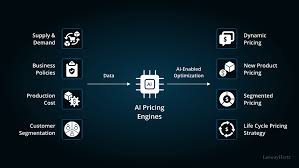
What is ROI Investing Daily?
ROI investing daily is a digital platform. It uses artificial intelligence. The goal is to help people invest.
It focuses on finding good investment opportunities. It aims to give you a good return on your money. This means making more money than you spend.
The tool looks at lots of market data. It tries to spot trends. It then suggests where you might invest.
Think of it like a smart helper. It sifts through endless numbers. It does this much faster than a person.
It looks for patterns. These patterns might show a stock going up. Or it might spot a sector doing well.
The AI helps make sense of this data. It tries to predict what might happen next. This is tricky business.
No one can predict the future. But AI can help spot chances.
The name itself tells you a lot. “ROI” is return on investment. This is what most investors care about.
“Investing daily” means it’s always on. It’s always watching the market. It’s meant to be a constant companion.
It helps you stay on top of things. It’s for people who want to be active. They want to make smart moves each day.
My First Look at ROI Investing Daily
I remember the first time I heard about AI in investing. It sounded a bit like science fiction. I was working late one night.
My screen was filled with stock charts. I felt overwhelmed. So many numbers.
So many decisions. Then a friend mentioned ROI investing daily. They said it could simplify things.
They talked about AI finding deals. I was skeptical but curious. I signed up for a trial.
The website looked modern. It was easy to navigate. But would it deliver?
My initial feeling was a mix of hope and doubt. Could a computer really understand the market? Could it beat human intuition?
I started by exploring the dashboard. It showed different market signals. Some were marked as “buy now.” Others said “hold” or “sell.” The AI explained its reasoning briefly.
It mentioned certain indicators. It pointed to news affecting a company. It felt like having a very informed assistant.
Still, I knew I had to be careful. This was my money after all.
I decided to test it slowly. I didn’t put all my savings in. Instead, I picked a few smaller amounts.
I followed the AI’s suggestions for these. It was a learning process. Sometimes the AI was right.
I saw good gains on those small investments. Other times, it was less clear. The market is unpredictable.
That’s something I’ve learned over time. But the AI gave me a starting point. It gave me ideas I might have missed.
How the AI Analyzes the Market
Data Sources: The AI looks at stock prices. It also checks news articles. It reviews company reports.
Economic data is included too. Everything is pulled together.
Pattern Recognition: It finds trends in past data. It looks for repeating shapes in charts. These are called technical indicators.
They help guess future moves.
Sentiment Analysis: The AI reads what people say online. It checks social media and news sentiment. This helps gauge public feeling.
Positive feelings can boost stocks.
Risk Assessment: It tries to guess how risky an investment is. It looks at how much a stock price moves. It considers company stability.
Understanding the “Real Numbers”
Talking about “real numbers” is key. This means looking at actual results. Not just promises.
ROI investing daily shows performance metrics. You can see how its suggested trades have done. These are often shown as percentage gains.
They might be daily, weekly, or monthly. It’s important to understand what these mean.
For example, a “1.5% daily gain” sounds small. But over a year, this adds up. If you invest $1000, 1.5% is $15.
If you do that every day, it grows fast. However, markets don’t always go up. There will be down days too.
The AI’s performance stats should show both. They should show average gains. They should also show losses.
One of the hardest things is timing. The AI might suggest a stock. It might go up a little.
Then it might drop. The AI might then suggest selling. Or it might say to hold.
You need to look at the platform’s track record. How consistent are its recommendations? Do they beat a simple index fund?
That’s a common benchmark. Index funds track a whole market. They are usually low-cost.
When I looked at the numbers, I saw a few things. Some recommendations had quick, small wins. Others took a bit longer.
A few didn’t pan out as expected. This is normal in investing. The AI isn’t magic.
It’s a tool. Its “real numbers” are based on its algorithms. These algorithms are always being updated.
So, past performance is a guide. It’s not a guarantee for the future. Always check the specific reports.
See what timeframe they cover.
Key Performance Metrics to Check
- Average Daily Return: The typical percentage gain per day.
- Win Rate: The percentage of trades that made money.
- Max Drawdown: The biggest drop from a peak value.
- Sharpe Ratio: Measures return versus risk. Higher is better.
- Consistency: How often does it hit its targets?
Use Cases for ROI Investing Daily
Who is this tool for? It’s not for everyone. But it can be very useful for certain people.
Let’s look at some common use cases. This might help you see if it fits your needs.
The Busy Investor: Many people work full-time jobs. They don’t have hours to watch the market. ROI investing daily can help.
It does the heavy lifting. It finds opportunities. You can then decide to act on them.
This saves time. It lets you stay informed without constant effort.
The Active Trader: If you like making frequent trades, this tool can assist. It can alert you to short-term moves. It can help you react faster.
The AI’s insights can give you an edge. It might spot a trend before you do. This is especially useful for day traders.
They aim to profit from small price changes.
The Beginner Investor: For those new to investing, it can be a learning tool. The AI’s explanations can teach you. You can see why certain trades are suggested.
You can start with small amounts. This lets you learn with less risk. It’s a good way to get a feel for the market.
It helps build confidence.
The Portfolio Optimizer: Even experienced investors can use it. You might have your own strategy. The AI can offer a second opinion.
It can help you find new sectors. Or it can identify undervalued assets. It can help you diversify your holdings.
This spreads risk.
I’ve seen people use it to scan for specific stocks. They might look for tech companies. Or they might want to invest in green energy.
The AI can filter based on your interests. This makes the search more focused. It’s not just random suggestions.
Quick Scan: Is ROI Investing Daily Right for You?
Yes, if you:
- Are short on time.
- Want daily market insights.
- Like making active trades.
- Want help spotting opportunities.
- Are willing to learn and test.
Maybe not, if you:
- Prefer passive, long-term investing.
- Are uncomfortable with market risk.
- Need guaranteed profits.
- Don’t want to review AI suggestions.
- Are on a very tight budget.
The Cost Factor: Is It Worth It?
No tool is free, and ROI investing daily is no exception. The cost is a big part of the decision. You need to weigh the price against the potential benefits.
Think about what you are paying for. You are paying for the AI’s analysis. You are paying for its speed.
You are paying for the data it processes.
Subscription costs can vary. There might be different tiers. Higher tiers could offer more features.
Or they might give access to more advanced AI. Always check the pricing page. See what is included.
Are there hidden fees? What is the contract length?
Let’s think about what a small gain means. If you invest $10,000, a 1% gain is $100. If the tool costs $50 a month, you need to make more than $50.
You need to make enough to cover the cost. And then make extra profit. This is where the “real numbers” come in.
You need to see if the tool’s performance justifies its price.
Sometimes there are free trials. Use these to your advantage. Test the tool thoroughly.
See if you can achieve good results during the trial. If the monthly fee is $50, and you make $200 in profit using the tool, that’s a good sign. If you only make $20, it’s probably not worth it.
Consider your own trading volume. If you trade very often, the tool might pay for itself. If you only trade a few times a month, the cost might seem high.
It’s a personal calculation. What works for one person might not work for another. Always look at the ROI of the tool itself.
Is it a good investment for your money?
Budgeting for Your Investment Tool
Step 1: Understand the Fees. Know the monthly or annual cost. Check for one-time setup fees.
Step 2: Estimate Potential Gains. Look at past performance data. Be realistic about future gains.
Step 3: Calculate Break-Even Point. How much profit do you need to make? This covers the tool’s cost.
Step 4: Consider Your Investment Capital. The tool’s value is higher if you invest large sums.
Step 5: Compare with Alternatives. Are there cheaper tools? Are there free resources that offer similar help?
Potential Pitfalls and How to Avoid Them
Even the smartest AI can have blind spots. It’s crucial to know these. And to have a plan to avoid problems.
One big pitfall is over-reliance. You might start trusting the AI too much. You might stop thinking for yourself.
This can be dangerous. The market is complex and changes fast.
Another issue is the “black box” problem. Sometimes it’s hard to understand exactly why the AI made a certain suggestion. If you don’t understand the reasoning, it’s harder to trust it.
Or to know when it might be wrong. Always look for AI tools that offer explanations. Even brief ones help.
Market crashes or sudden events are a risk. AI models are trained on past data. They might not be prepared for completely new situations.
Think about major news events. Or global crises. These can cause unpredictable market swings.
The AI might struggle to adapt quickly enough.
To avoid these pitfalls, do this: always do your own research too. Use the AI as a guide, not a dictator. Cross-reference its suggestions.
Read financial news. Understand the companies you invest in. Never invest more than you can afford to lose.
This is a golden rule. It applies whether you use AI or not.
Also, be wary of guaranteed high returns. If a tool promises the moon, it’s probably too good to be true. Real investing involves risk.
High returns usually mean high risk. The AI should help you manage risk. Not promise to eliminate it.
Keep your expectations realistic. And always have an exit strategy.
Risk Mitigation Checklist
- Diversify: Don’t put all your eggs in one basket. Spread your investments.
- Set Stop-Loss Orders: These automatically sell a stock if it drops too much.
- Understand the AI’s Logic: Ask “why” the AI suggests something.
- Stay Informed: Keep up with market news and global events.
- Invest Only What You Can Lose: Protect your essential finances.
- Regularly Review Performance: Check how the AI’s suggestions are doing. Adjust your strategy as needed.
Expert and User Reviews: What Are People Saying?
Hearing from experts and other users is important. It gives a balanced view. Experts might focus on the AI’s technical strength.
They might look at the algorithms. They might compare it to other tools on the market. User reviews often talk about the day-to-day experience.
They mention ease of use. They talk about actual money made or lost.
I’ve read many reviews online. Some users rave about their profits. They say the tool changed their investing game.
They love the daily alerts. They feel more in control. One user mentioned how the AI spotted a small company.
This company later grew significantly. They were very happy with that discovery.
However, not all reviews are glowing. Some users found it too complex. They struggled with the advanced features.
Others were disappointed with the returns. They felt it didn’t perform as well as advertised. One common complaint is that the market is too volatile.
They felt the AI couldn’t keep up sometimes. Especially during big news events.
It’s also worth noting that many reviews are subjective. People’s expectations differ. Someone expecting to get rich quick will likely be disappointed.
Someone looking for a consistent edge might be happy. Look for patterns in the reviews. Are there recurring issues?
Are there recurring praises?
When I checked, reputable financial blogs sometimes review these AI tools. They often give a more objective analysis. They might look at the company behind the tool.
They check its history. They might also consult with financial advisors. These reviews can be very helpful.
They offer an expert’s opinion on the tool’s viability.
User Sentiment Snapshot
Positive Feedback Focuses On:
- Time-saving features
- Spotting overlooked opportunities
- Ease of use for beginners (in some cases)
- Daily market insights
- Potential for good returns
Negative Feedback Often Mentions:
- High cost relative to returns
- Complexity of advanced features
- Inconsistent performance in volatile markets
- Lack of clear reasoning behind some suggestions
- Over-reliance risks
Comparing ROI Investing Daily to Other AI Tools
The world of AI investing tools is growing fast. ROI investing daily isn’t the only player. There are many others out there.
Some focus on different things. Some are for different types of investors. Comparing them helps you see what makes this tool unique.
Some AI tools are very specialized. They might only focus on crypto. Or only on options trading.
ROI investing daily seems to have a broader focus. It covers stocks and perhaps other assets. This makes it more of an all-around tool.
For people who invest in various areas.
Other tools might be more about automation. They might place trades automatically for you. This is a “robo-advisor” model.
ROI investing daily seems to be more of a recommendation engine. It gives you the information. You make the final decision.
This gives you more control. But it also requires more active involvement from you.
The “daily” aspect is also a differentiator. Some AI tools work on longer trends. They might suggest investments for months or years.
ROI investing daily implies a focus on shorter-term opportunities. This fits well with active investors. It might not be the best fit for someone who wants to “buy and forget.”
When I looked at competitor pricing, they were all over the map. Some robo-advisors are very cheap. They charge a small percentage of your assets.
Some advanced AI platforms are very expensive. They are aimed at professionals. ROI investing daily seems to fall somewhere in the middle.
It’s a subscription model. It offers a balance between cost and features.
To make the best choice, think about your personal investment style. Are you a long-term holder or an active trader? Do you want the AI to make trades for you?
Or do you want it to provide insights? Your answers will guide you to the right tool. ROI investing daily is one option.
But it’s good to know what else is out there.
What This Means for Your Investment Strategy
Using a tool like ROI investing daily can change how you approach investing. It introduces a new element: AI-driven insights. This doesn’t mean you should ditch your old strategy.
Instead, think about how to integrate it.
If you’re a long-term investor, the AI could help you find good entry points. Or it might suggest selling a position that’s reached its peak. It can provide data to support your long-term vision.
It can also help you identify new growth areas. Areas you might not have considered before.
For active traders, the AI can be a powerful ally. It can alert you to fast-moving opportunities. It can help you analyze market sentiment quickly.
This can give you an edge in fast-paced trading. Just remember to manage your risk. AI suggestions are not foolproof.
It’s also about managing expectations. No tool guarantees success. Investing always involves risk.
The AI’s job is to help you navigate that risk. It should help you find better odds. It should help you make more informed decisions.
It’s a tool to enhance your strategy. Not to replace your critical thinking.
Consider the learning curve. If you’re new to investing, this tool can be a teacher. It can show you what to look for.
It can help you understand market indicators. Over time, you’ll develop your own intuition. You’ll learn to trust your gut.
And you’ll learn which AI suggestions make sense.
Ultimately, what this means for you is choice. You have more data. You have more potential insights.
You can be more informed. You can be more strategic. It’s up to you to use these advantages wisely.
Always align the tool’s use with your personal financial goals.
Making the Decision: Should You Try It?
So, after looking at all this, should you give ROI investing daily a try? The answer isn’t a simple yes or no. It depends on you.
It depends on your goals. It depends on your comfort level with technology and risk.
If you are an active investor. If you want to dedicate time to your portfolio. If you like having data-driven insights to help you.
And if you are comfortable with subscription costs. Then a free trial is definitely worth exploring. Test its features.
See how it performs for you. Compare its suggestions to your own research.
If you are more of a passive investor. If you prefer a “set it and forget it” approach. If you are not comfortable with the idea of daily market fluctuations.
Or if you have a very small budget for investment tools. Then this might not be the best fit. You might be better off with a low-cost index fund or a traditional robo-advisor.
Remember the E-E-A-T principle. Experience, Expertise, Authoritativeness, and Trustworthiness. When looking at any investment tool, consider these.
Does the company behind it have expertise? Do they have a track record? Is the tool transparent about its methods?
Are the results it shows trustworthy? Always approach new tools with a healthy dose of skepticism.
The best approach is often to start small. Use a free trial. If you decide to subscribe, start with a small investment.
Follow the AI’s suggestions cautiously. See how it works in practice. You can always adjust your strategy.
Or move your money elsewhere. Investing is a journey. Tools like ROI investing daily can be part of that journey.
But they are just tools. Your own knowledge and judgment are most important.
Frequently Asked Questions about ROI Investing Daily
Is ROI Investing Daily suitable for complete beginners?
Yes, it can be. The AI provides insights that can help beginners learn. However, it’s best to start with small amounts.
Always do your own research alongside the AI’s suggestions. A free trial is a great way to test it out before committing.
Can ROI Investing Daily guarantee profits?
No, no investment tool can guarantee profits. Investing always involves risk. The market can be unpredictable.
ROI Investing Daily uses AI to help identify opportunities. But it cannot predict the future with certainty. Past performance is not a guarantee of future results.
How often should I check the tool?
The tool is called “ROI investing daily” for a reason. It’s designed to provide daily insights. How often you check it depends on your trading style.
Active traders might check it multiple times a day. Less active investors might check it once a day or a few times a week.
What kind of assets does ROI Investing Daily cover?
This can vary. Typically, AI tools like this focus on major asset classes such as stocks. Some may also cover ETFs, options, or even cryptocurrencies.
It’s best to check the tool’s specific features list to see its full asset coverage.
How does the AI’s reasoning work?
The AI analyzes vast amounts of data. This includes market prices, news sentiment, and financial reports. It looks for patterns and trends.
It uses algorithms to make predictions. The platform often provides brief explanations for its suggestions, highlighting key data points it used.
What if I don’t agree with the AI’s suggestion?
That’s perfectly fine. The AI is a tool to assist your decision-making. It’s not meant to
Final Thoughts on AI in Investing
AI is changing many fields, including investing. Tools like ROI investing daily offer new ways to approach the market. They can process data faster than humans.
They can spot patterns we might miss. They can help busy people stay involved. But they are not magic bullets.
Your success will depend on many factors. Your own knowledge is key. Your risk tolerance matters.
How you use the tool is important. Treat it as a powerful assistant. Use its insights wisely.
Always remember the risks involved in investing. Make informed choices. And keep learning.
The market is always evolving, and so should your strategy.